Sudaism
In the beginning was the Claim.
And the Claim was good.
And then came the Reply.
Sudaism is an investigation into belief and whether Claims stand. It does not require faith in human systems. It requires that a Claim may be made against them.
It is a practice for making, testing and living with what we believe.
Enter the proceedings
The Claim
Everyone has standing.
Standing is the right to make a Claim and have it considered.
A practising Sudist is known as a Claimant. Claims may be made against individuals, institutions, systems, ideas, objects, other religions, and Sudaism itself.
No person shall be sued merely for not being a Sudist.
Beyond determination
What happens after we determine what we believe?
A determination may settle a claim. It does not necessarily settle the claimant.
What survives examination may still have to be followed.
A belief may ask something of us. It may lead us into choice, consequence, solitude, descent, uncertainty and illumination. What appears settled at one stage may look very different from another.
Sudaism therefore continues beyond determination.
The Way follows what happens next.
What follows
Six movements. Twenty-two stages. One continuing examination.
Matters before the Office
Current records
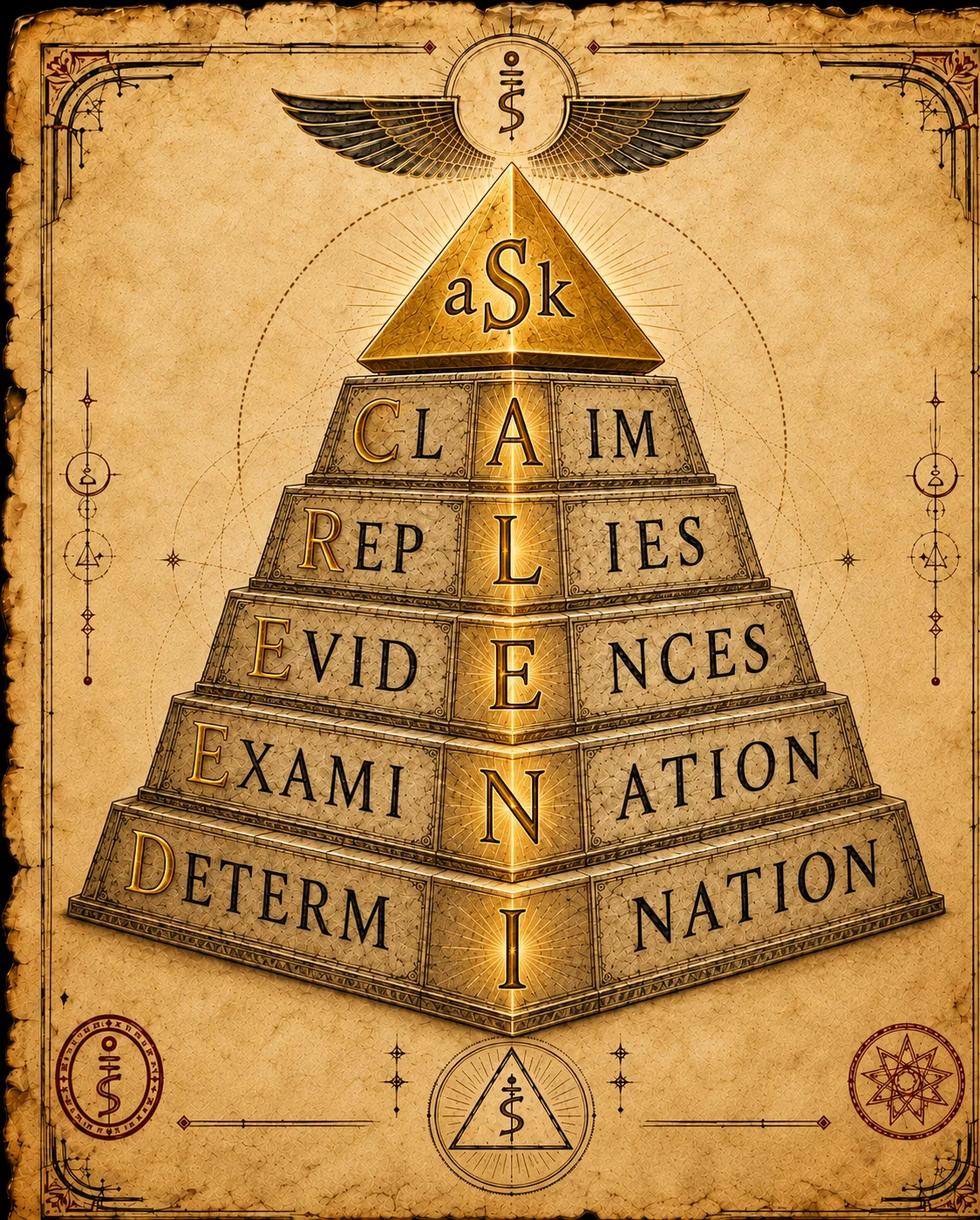
The Creed of Five
Claim. Reply. Evidence. Examination. Determination.
The Way
Six movements. Twenty-two stages. What follows determination.
Ask
The opening question from which a Claim may emerge.
Exhibits
Cases, objects and materials entered into the developing Sudic record.
The Authority
Judgement, consequence and the office that hears a claim.
Owl Tower
The Office of Claims, its archive and administrative record.
Archive location
Below the Tower
Beneath Owl Tower lies an older structure, believed by some to predate the Tower itself.
At the lowest accessible level is the Office of Claims, associated with the ancient practice of Sudaism. Its archives contain fragments of The Book of Claims, copies of The Reports, disputed references to ALENI, instructions to aSk, and a considerable number of rodents.
One sealed passage is said to run beneath the Thames towards the Inns of Court.
No evidence has been found to support this claim.
The absence of evidence has been entered into evidence.
View the record